
UCL & Tommy John Rehabilitation on Long Island
Recovering from a UCL injury or Tommy John surgery requires more than following a standard rehabilitation protocol. At Longevity Physical Therapy & Performance on Long Island, we provide individualized, one-on-one rehabilitation designed to restore throwing capacity, rebuild confidence, and prepare athletes for the demands of competitive sports.
Led by Lewis Lupowitz, PT, DPT, SCS, CSCS, an American Sports Medicine Institute (ASMI) fellowship-trained physical therapist with experience treating more than 100 UCL and Tommy John cases, our approach combines advanced sports medicine principles, objective strength and performance testing, and progressive throwing activities performed directly in our clinic. From early postoperative rehabilitation to return-to-throwing and competitive performance, every stage is guided by your individual recovery, physical readiness, and athletic goals.
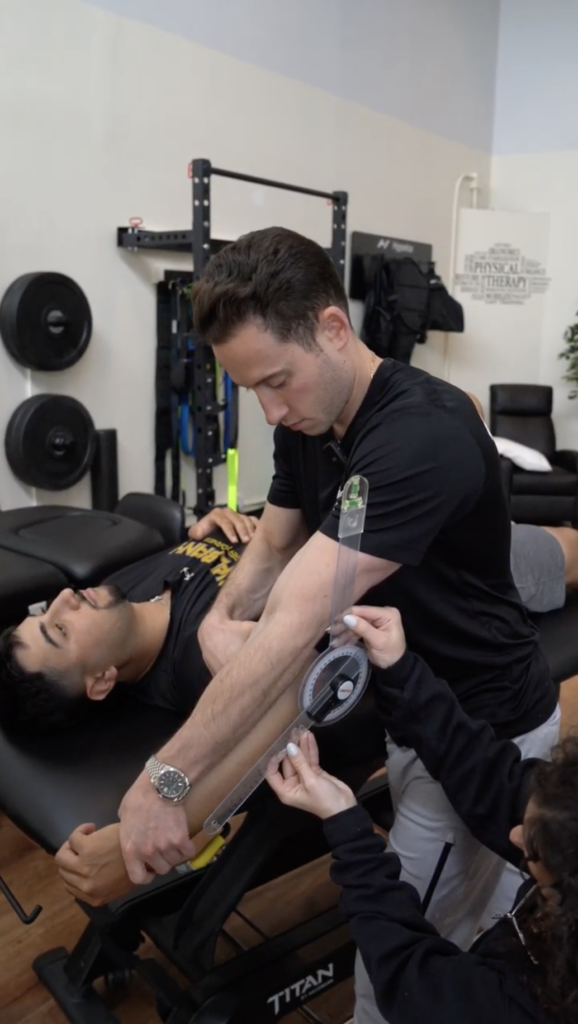
Why Choose Longevity for UCL / Tommy John Rehabilitation?
Specialized Expertise.
Individualized Care.
A Higher Standard of Rehabilitation.
Tommy John rehabilitation requires more than following a generic postoperative protocol. It demands an understanding of elbow biomechanics, tissue healing, progressive throwing demands, and the physical preparation necessary for a successful return to competition.
Our philosophy is simple: Play the Long Game.
We look beyond pain relief and basic clearance to develop the strength, throwing capacity, resilience, and confidence athletes need to return to sport — and sustain their performance.
This approach is supported by advanced clinical training and specialized experience. Rehabilitation at Longevity is led by Lewis Lupowitz, PT, DPT, SCS, CSCS, who completed sports medicine fellowship training at the American Sports Medicine Institute (ASMI) in Birmingham, Alabama, learning from internationally recognized leaders in overhead athlete medicine and rehabilitation.
Specialized Experience at Every Level
With experience treating more than 100 UCL and Tommy John cases, working with professional athletes, and contributing to published research and national conference presentations, Lewis brings extensive clinical experience to every stage of rehabilitation.
His experience includes serving on the rehabilitation team for NFL quarterback Nick Mullens following UCL repair with internal brace augmentation, helping support his successful return to professional football.
From the Treatment Table to the Throwing Field
Our rehabilitation doesn’t stop at restoring elbow motion or improving strength. We integrate shoulder and scapular control, trunk and lower-body strength, objective performance testing, plyometric development, and progressive throwing activities performed directly in our clinic.
This allows us to evaluate how athletes move, respond to load, and tolerate throwing as they progress toward the demands of their sport.
One Athlete. One Therapist. One Individualized Plan.
Every session is one-on-one and built around the athlete’s specific injury, surgical procedure, physical readiness, position, and competitive goals. We work to identify and address the factors that may have contributed to the injury while developing the physical qualities needed for long-term performance.
Whether you’re a Little League player, high school pitcher, collegiate athlete, or aspiring professional, our goal is the same: provide the specialized attention, clinical expertise, and progressive preparation needed to return to throwing with confidence.
We don’t just rehabilitate elbows. We prepare athletes for what comes next.
Our Approach to Tommy John Rehabilitation
Phase 1: Restore & Rebuild
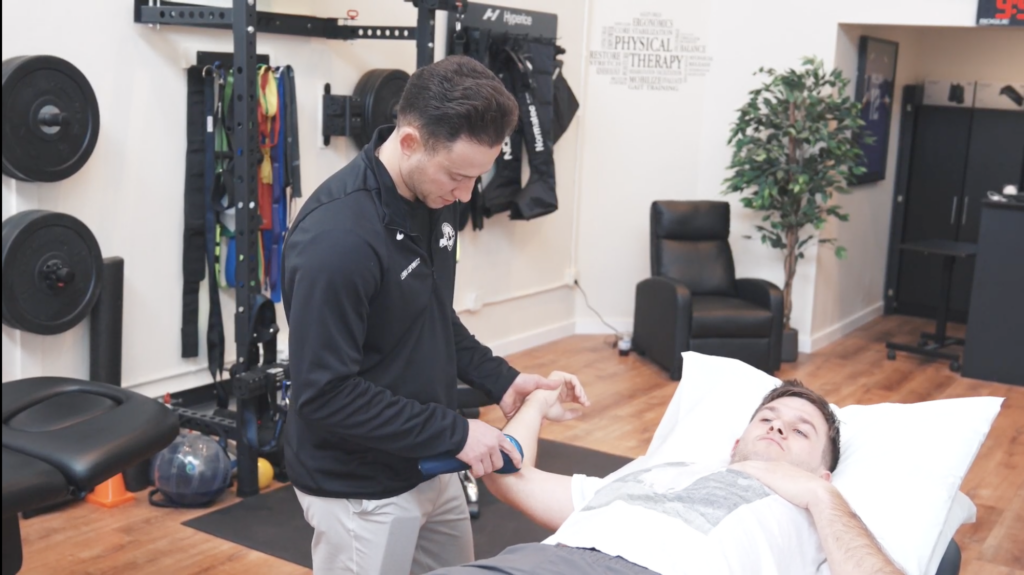
Every successful return begins with a strong foundation. We focus on protecting healing tissues, restoring elbow mobility, managing pain and swelling, and gradually rebuilding strength throughout the arm and body. Rehabilitation is individualized to the athlete’s injury, surgical procedure, and stage of recovery, with close attention to tissue healing and surgeon-specific precautions.
Phase 2: Build Strength & Throwing Capacity
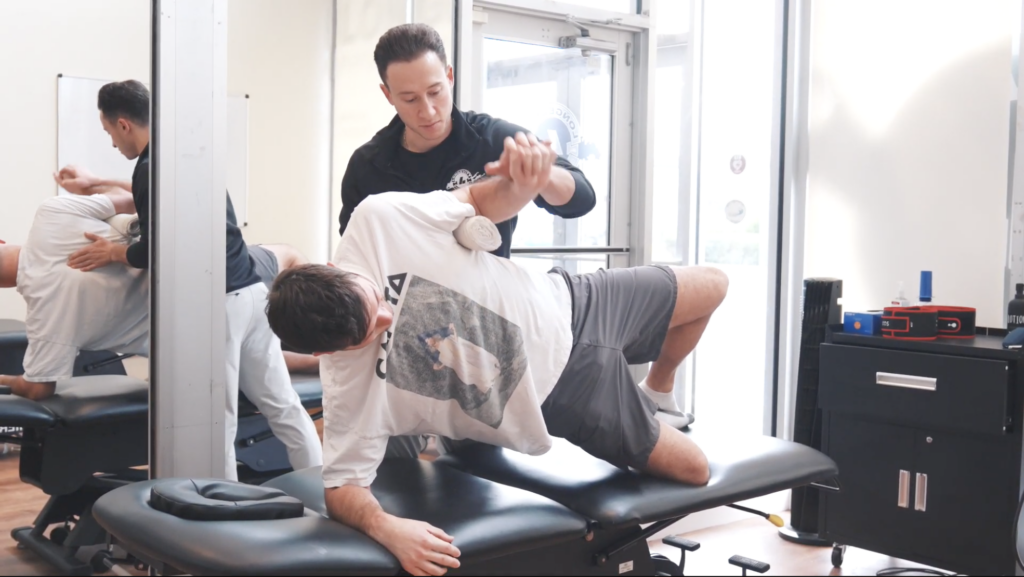
As the elbow progresses through healing, rehabilitation shifts toward developing the strength, stability, and physical capacity required for throwing. We focus on the entire kinetic chain—including the shoulder, scapula, trunk, hips, and lower body—while progressively introducing resistance training, dynamic stability, and plyometric exercises. Objective strength testing helps us identify remaining deficits and guide progression, ensuring athletes develop the foundation needed to safely advance toward higher-intensity throwing activities.
Phase 3: Return to Throwing
Returning to throwing requires more than a healed elbow and restored strength. At Longevity, we bridge the gap between traditional rehabilitation and on-field performance through objective readiness testing, upper-extremity plyometrics, and progressive throwing activities performed directly in our dedicated indoor throwing space. This allows us to assess throwing mechanics, provide real-time feedback, and monitor movement quality and workload tolerance throughout rehabilitation. Each throwing program is individualized based on the athlete’s injury, surgical procedure, position, and competitive goals, with progression guided by measurable readiness rather than time alone.
Phase 4: Return to Sport & Performance
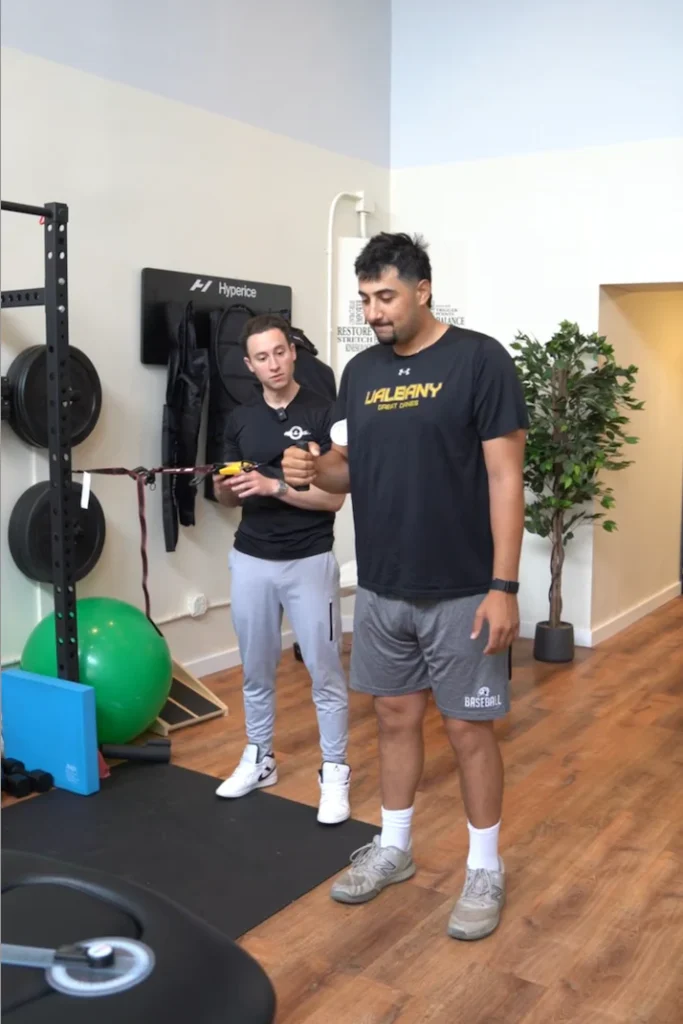
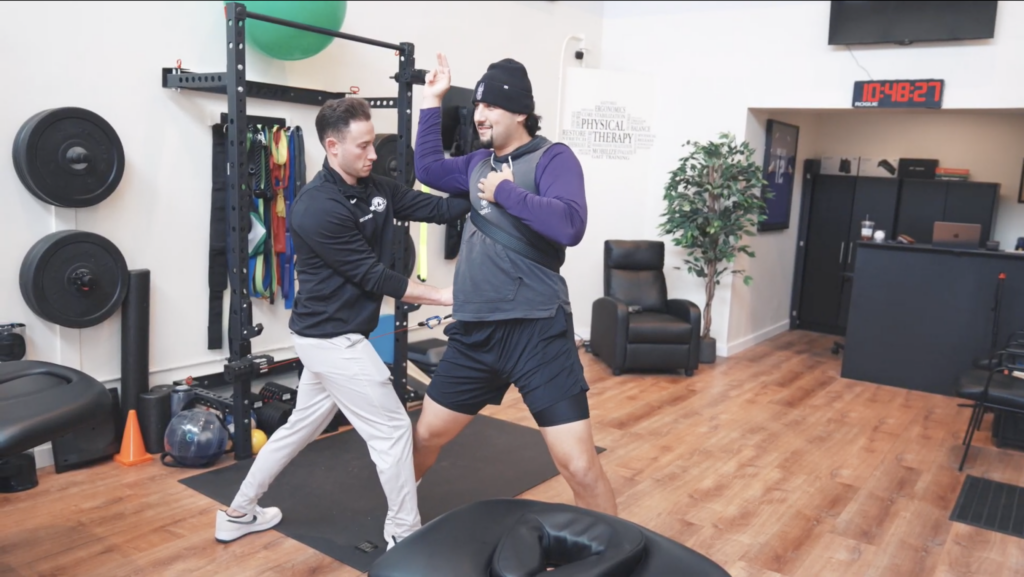
Returning to competitive sport requires more than completing a throwing program. At Longevity, we prepare athletes for the physical demands of their position and level of competition through advanced strength and power development, sport-specific training, and objective return-to-sport testing. We progressively integrate higher-intensity throwing, workload management, and performance-based assessments to identify remaining deficits and guide a confident transition back to practice and competition. Our goal is not simply to return athletes to their previous level of play, but to build the physical capacity and resilience needed for long-term performance.
Who We Treat: Athletes at Every Level
From youth baseball players navigating their first elbow injury to high school, collegiate, and professional athletes returning from Tommy John surgery, Longevity provides individualized rehabilitation tailored to each athlete’s needs. Whether recovering from a UCL sprain, traditional UCL reconstruction, UCL repair with internal brace, or newer hybrid procedures such as TJ3, our approach accounts for the athlete’s surgical procedure, stage of development, competitive demands, and long-term goals. Every athlete receives the same commitment to specialized, one-on-one care—regardless of their level of competition.
Frequently Asked Questions About UCL & Tommy John Rehabilitation
How long does it take to return to throwing after Tommy John surgery?
Recovery timelines vary depending on the surgical procedure, tissue healing, and individual athlete. Following traditional UCL reconstruction, return to competitive pitching often takes approximately 12–18 months. UCL repair with internal brace may allow for an accelerated rehabilitation progression, with typical milestones including:
10–12 weeks: Introduction of upper-extremity plyometrics
16–20 weeks: Initiation of an interval throwing program
6–12 months: Progressive return to competitive play
Hybrid procedures such as TJ3 require individualized rehabilitation based on surgical considerations and healing. At Longevity, progression is guided by objective strength testing, throwing readiness, symptom response, and workload tolerance—not timelines alone.
What is the difference between Tommy John reconstruction, UCL repair with internal brace, and TJ3?
Traditional Tommy John surgery reconstructs the damaged UCL using a tendon graft, while UCL repair with internal brace preserves and repairs the native ligament with additional suture-tape reinforcement. TJ3 is a hybrid procedure combining elements of ligament repair and reconstruction. The appropriate procedure depends on the location and quality of the ligament injury, athlete characteristics, and surgeon assessment. Because each procedure has different healing considerations, rehabilitation must be tailored to the specific surgical technique rather than following a one-size-fits-all protocol.
When should physical therapy begin after Tommy John surgery?
At Longevity, we believe rehabilitation begins immediately following surgery, with physical therapy often initiated within 24–48 hours, depending on the surgical procedure and surgeon-specific precautions. Early intervention focuses on protecting the healing ligament, managing pain and swelling, restoring appropriate mobility, and maintaining strength throughout the shoulder, trunk, and lower body. Our goal is to optimize the early recovery process while respecting biological healing and establishing a strong foundation for the progressive demands of throwing.
Do all UCL injuries require Tommy John surgery?
Not every UCL injury requires surgery. Depending on the severity and location of the tear, ligament integrity, and athlete’s competitive demands, some injuries can be successfully managed through nonoperative rehabilitation. At Longevity, we focus on restoring elbow function, improving shoulder and kinetic-chain strength, and progressively rebuilding throwing capacity. We work alongside the athlete’s physician to determine whether conservative treatment is appropriate and guide a safe, individualized return-to-throwing progression.
What makes Longevity different from traditional Tommy John rehabilitation?
At Longevity Physical Therapy & Performance, athletes receive individualized, one-on-one care from a fellowship-trained, board-certified sports physical therapist with experience treating more than 100 UCL injuries and postoperative cases. Our approach combines specialized clinical expertise, objective strength and performance testing, comprehensive kinetic-chain training, and dedicated indoor space for throwing activities during rehabilitation. Rather than simply following a protocol, we develop a personalized plan that bridges the gap between surgery, rehabilitation, and competitive performance. Our philosophy is simple: Play the Long Game.
Ready to Get Back in the Game
Whether you’re recovering from a UCL injury, preparing for Tommy John surgery, or working toward a return to competitive throwing, Longevity Physical Therapy & Performance provides the specialized care and individualized attention you deserve. Located in West Hempstead, Long Island, we help athletes at every level rebuild strength, restore confidence, and prepare for the demands of their sport.
Your comeback deserves more than a standard protocol. Play the Long Game.

