
ACL Rehabilitation & Return-to-Sport on Long Island
Specialized ACL Rehabilitation | Fellowship-Trained Sports Physical Therapist | Objective Return-to-Sport Testing
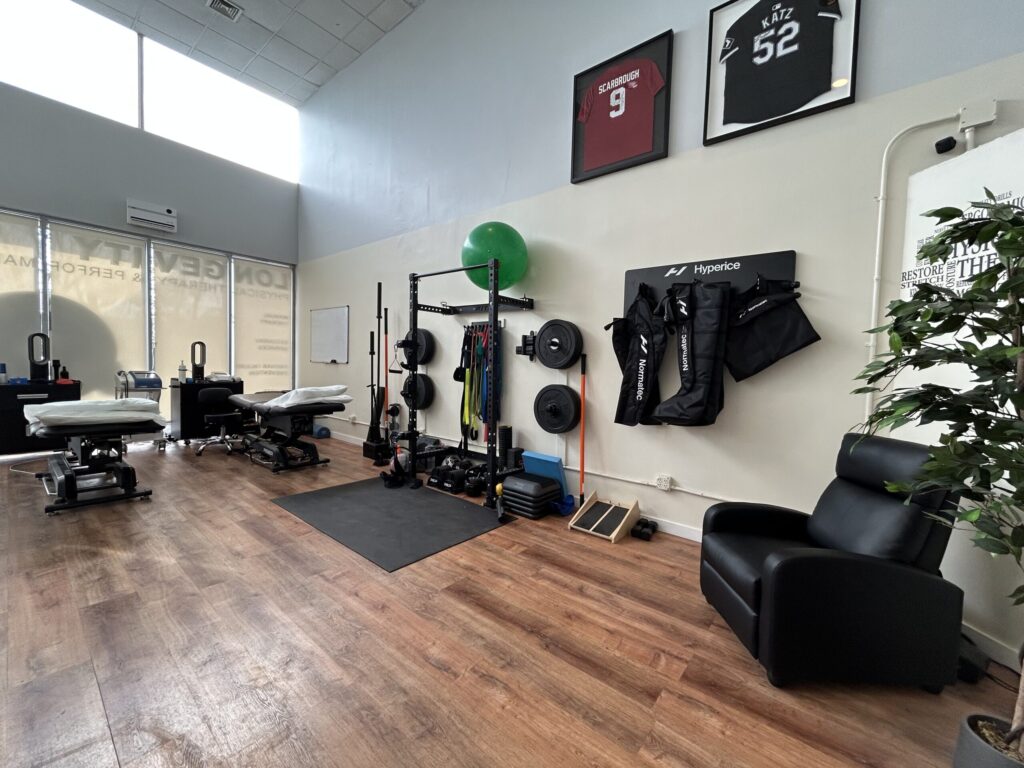
Recovering from an ACL injury or ACL reconstruction requires more than traditional physical therapy. At Longevity Physical Therapy & Performance, we provide individualized, evidence-informed ACL rehabilitation designed to restore strength, rebuild confidence, optimize athletic performance, and prepare athletes for the demands of their sport.
Located in West Hempstead, NY, within Cherry Valley Sports, our practice combines one-on-one sports physical therapy with access to a commercial-sized strength and conditioning facility and turf field. This allows us to bridge the gap between early-stage rehabilitation and high-level athletic performance.
Led by Lewis Lupowitz, PT, DPT, SCS, CSCS, a fellowship-trained and board-certified sports physical therapist with experience treating over 500 ACL cases, Longevity provides comprehensive rehabilitation for athletes of all ages, sports, and competitive levels.
Whether you’re recovering from ACL reconstruction, managing a nonoperative ACL injury, or struggling to return to sport after traditional physical therapy, our goal is to help you return stronger, more confident, and prepared for the demands ahead.
Our ACL Rehabilitation Approach
At Longevity Physical Therapy & Performance, ACL rehabilitation goes beyond restoring knee motion and strength. Our goal is to help athletes return to their sport with the physical capacity, confidence, and resilience needed for long-term success.
Every athlete receives individualized, one-on-one care from a board-certified sports physical therapist with extensive experience managing ACL injuries, primary and revision reconstructions, and complex return-to-sport cases.
Our approach combines progressive strength training, objective performance testing, neuromuscular and neurocognitive rehabilitation, and sport-specific movement preparation. We assess the entire athlete—not just the injured knee—to identify deficits in strength, coordination, movement quality, and physical readiness.
Rather than progressing athletes based on time alone, we use measurable benchmarks, symptom response, and individual recovery to guide each stage of rehabilitation. From the early postoperative period through cutting, jumping, deceleration, and competitive play, every phase is designed to prepare athletes for the demands they’ll face when they return.
We don’t just rehabilitate ACL injuries. We prepare athletes to perform. Play the Long Game.
Rehabilitation After ACL Reconstruction
ACL rehabilitation is not a one-size-fits-all process. Every athlete’s recovery is influenced by graft selection, surgical technique, associated injuries, tissue healing, and individual athletic goals.
At Longevity Physical Therapy & Performance, we use a progressive, criteria-based approach that respects biological healing while systematically rebuilding strength, movement capacity, and sport-specific performance. Each phase prepares athletes for the physical demands of the next, with objective testing helping guide progression.
Phase 1: Restore Motion, Reduce Swelling & Rebuild Quadriceps Function
Early rehabilitation focuses on protecting healing tissues, restoring full knee extension and progressive flexion, reducing swelling, and rebuilding quadriceps function. We emphasize early muscle activation, gait mechanics, and appropriate loading while respecting graft healing, associated procedures, and surgeon-specific precautions.
Most importantly, we use this phase to educate athletes and their families, establish expectations, and set the foundation for the entire rehabilitation journey. ACL recovery is a long-term process, and understanding what lies ahead—from strength development and running to cutting, jumping, and eventually returning to competition—is essential.
We establish clear goals, explain the milestones that guide progression, and help athletes understand the importance of consistency, patience, and preparation. A successful return to sport starts long before an athlete steps back onto the field. It starts with building the right foundation from day one.
Phase 2: Rebuild Strength & Movement Capacity
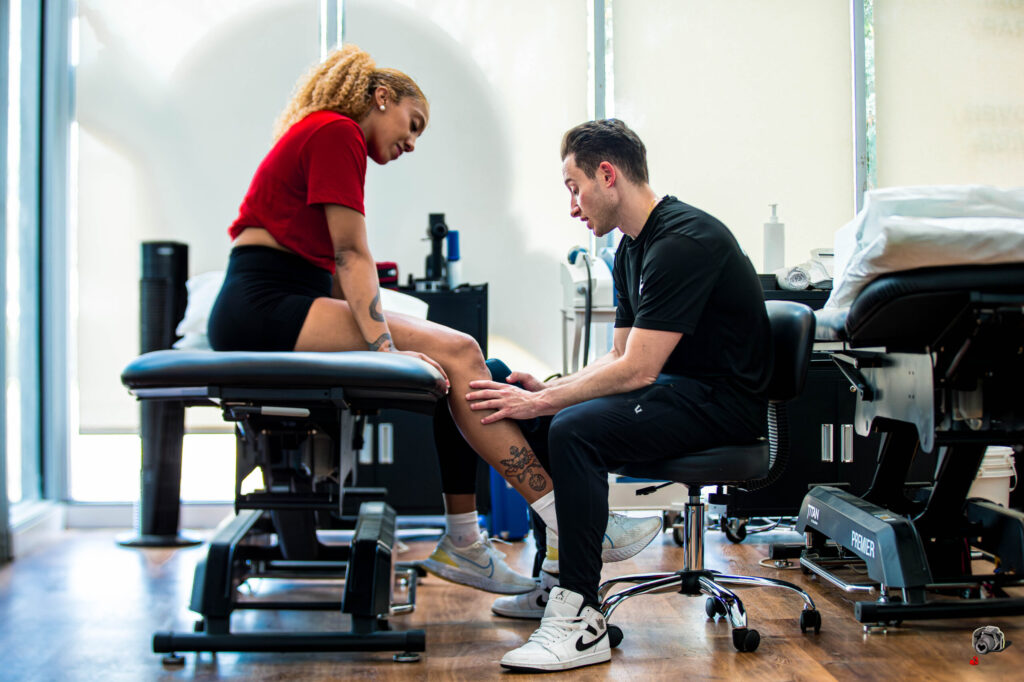
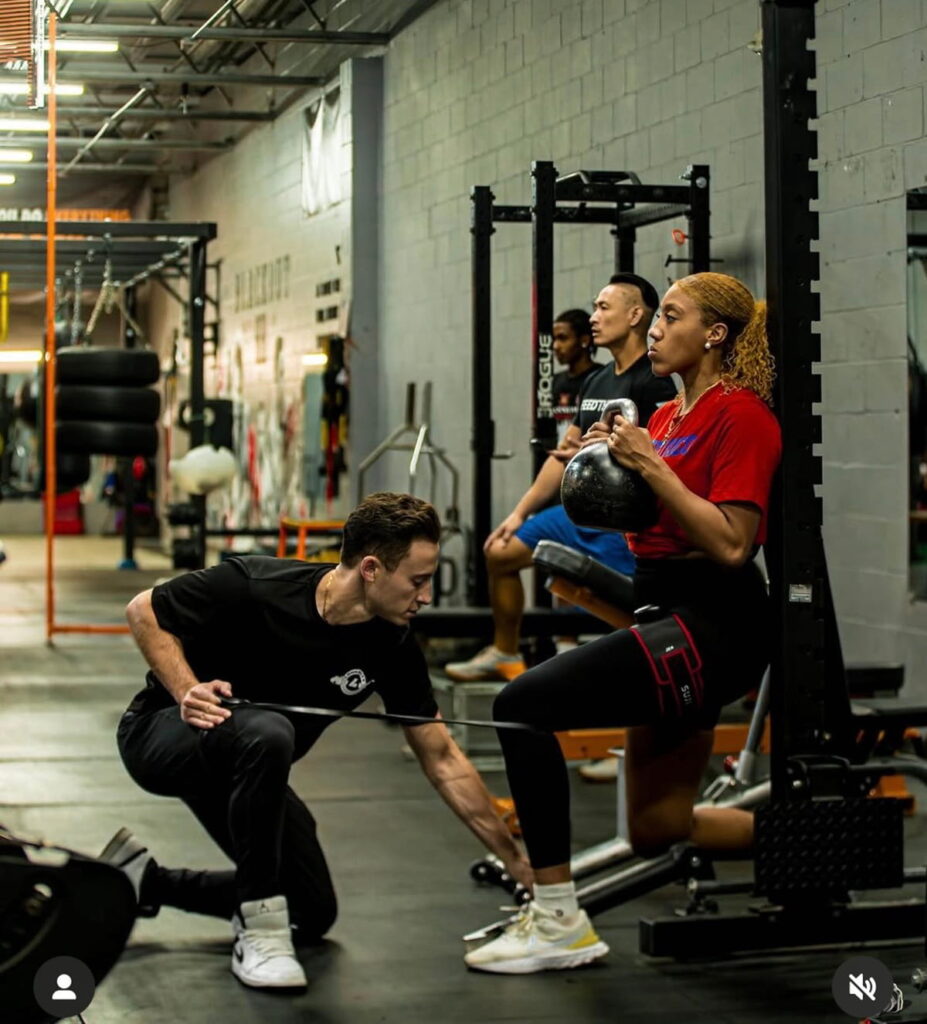
As the knee continues to heal, rehabilitation shifts toward rebuilding strength, restoring movement quality, and developing the physical capacity needed for higher-level activity. We progressively challenge the quadriceps, hamstrings, hips, and entire lower extremity through individualized strength training, single-leg exercises, balance, and neuromuscular control.
Our focus is not simply making the injured leg stronger—it’s preparing the entire athlete for the demands ahead. We address strength asymmetries, movement compensations, and deficits that may have existed before the injury while progressively introducing more challenging functional tasks.
Using objective strength testing, movement assessments, and the athlete’s response to loading, we establish measurable benchmarks that guide progression toward running, jumping, and more advanced athletic activities. Each milestone is earned through demonstrated readiness rather than time alone.
Phase 3: Introduce Running, Jumping & Athletic Movements
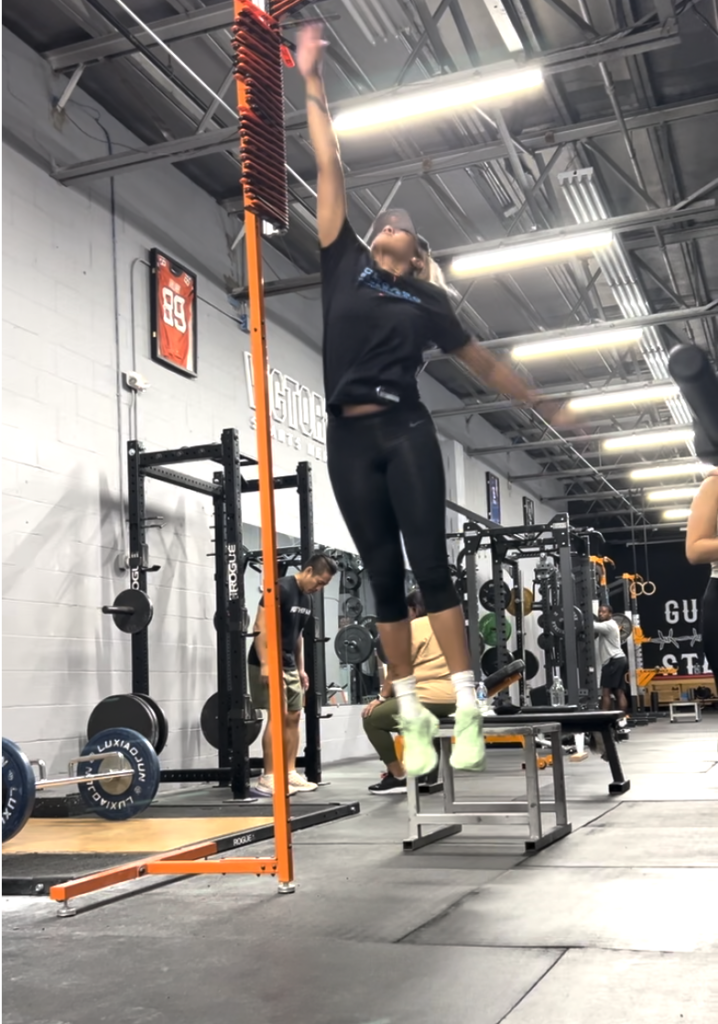
As athletes demonstrate sufficient strength, movement quality, and tolerance to loading, we progressively introduce running, plyometrics, landing mechanics, acceleration, deceleration, and multidirectional movement.
This is where rehabilitation begins to look and feel more like athletic training. We emphasize not only how much force an athlete can produce, but how effectively they can absorb, control, and redirect that force during increasingly demanding movements.
Our approach incorporates objective strength and performance testing, neuromuscular and neurocognitive training, and progressive exposure to sport-related movement demands. Athletes are challenged to react, make decisions, and maintain movement quality under increasingly complex conditions.
Progression is guided by measurable performance benchmarks, knee symptoms and swelling, movement competency, and individual readiness—not simply the number of months since surgery. Our goal is to build the physical capacity and confidence needed to prepare athletes for the unpredictable demands of sport.

Phase 4: Return to Sport & Performance
Returning to sport is more than receiving medical clearance or reaching a specific postoperative timeline. It requires demonstrating the physical capacity, movement competency, confidence, and resilience necessary to tolerate the demands of training and competition.
At Longevity Physical Therapy & Performance, we believe return-to-sport decisions should be earned through objective testing, not determined by time alone. Our comprehensive testing process evaluates quadriceps and hamstring strength, limb symmetry, power production, hop performance, reactive strength, movement quality, and sport-specific readiness.
We progressively expose athletes to high-speed running, cutting, pivoting, reactive agility, and unpredictable sport-specific scenarios. By integrating neurocognitive challenges, decision-making, and fatigue-based training, we aim to prepare athletes for the physical and mental demands of competitive play.
Our work doesn’t stop when an athlete passes a test. We collaborate with athletes, families, coaches, and medical providers to guide a gradual transition from rehabilitation to unrestricted practice and competition. We also emphasize ongoing strength development, workload management, and long-term athletic performance.
Our ultimate goal isn’t simply to get athletes back to their sport. It’s to help them return prepared, confident, and equipped to perform at their highest level. Play the Long Game.
Objective ACL Return-to-Sport Testing
At Longevity Physical Therapy & Performance, we believe feeling ready and being ready are not always the same. Returning to sport after ACL reconstruction requires more than adequate healing, symmetrical movement, or reaching a specific postoperative milestone.
We don’t guess. We assess. Using force plate technology, handheld dynamometry, and comprehensive performance testing, we collect objective data to evaluate quadriceps and hamstring strength, rate of force development, power production, limb symmetry, hop performance, and movement quality.
Numbers don’t lie—and objective assessment should be a cornerstone of return-to-sport decision-making. Our testing helps identify strength deficits, performance asymmetries, and limitations that may otherwise go unnoticed during traditional rehabilitation.
But numbers alone don’t tell the entire story. We also evaluate how athletes move, react, and perform under fatigue, incorporating neurocognitive challenges, reactive agility, cutting, deceleration, and sport-specific decision-making.
Testing isn’t simply about passing or failing. We use the results to individualize training, track progress, address remaining deficits, and collaborate with athletes, families, coaches, and surgeons to make informed return-to-sport decisions.
Our philosophy is simple: Measure what matters. Train what needs improvement. Prepare for what the sport demands. Play the Long Game.
Why Athletes & Families Choose Longevity
Choosing the right physical therapist after an ACL injury is one of the most important decisions an athlete and their family will make. ACL rehabilitation is a long-term commitment, and the quality of care, communication, and preparation throughout that process matters.
At Longevity Physical Therapy & Performance, athletes benefit from:
-
Experience That Matters: With experience treating more than 500 ACL cases, including primary and revision reconstructions, we understand the complexities of recovery and the demands of returning to competitive athletics.
-
True One-on-One Care: Every session is individualized and spent directly with your physical therapist—not divided between multiple patients or delegated to aides.
-
Clear Communication & Education: We help athletes and families understand the rehabilitation process, establish realistic expectations, and recognize the milestones that matter. We also collaborate with surgeons, athletic trainers, and coaches to support continuity of care.
-
Objective, Data-Driven Progression: Force plate testing, dynamometry, and comprehensive performance assessments help guide rehabilitation and identify deficits that traditional evaluations may miss.
-
Rehabilitation That Goes Beyond the Clinic: We integrate advanced strength training, neurocognitive challenges, and sport-specific preparation to bridge the gap between physical therapy and competitive performance.
Our commitment is simple: provide the level of individualized care, expertise, and attention we would want for our own family. We don’t just focus on getting athletes back—we focus on preparing them for what comes next. Play the Long Game.
Your Comeback Starts With A Better Plan
Whether you’re recovering from ACL reconstruction or preparing to return to sport, you deserve an individualized plan built around your goals.

